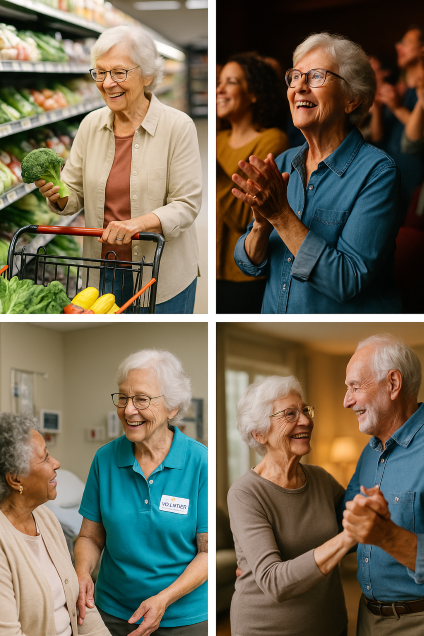
Retirement often brings a welcome sense of freedom. For many older adults, its greatest gift is the ability to control their own time—sleep when they wish, rise when they choose, and explore hobbies that work life once made difficult. Yet retirement also comes with its own challenges: increased sedentary time, boredom, and the temptation to take on activities that may not match one’s physical capabilities.
As people age, medical issues they are genetically predisposed to can begin to surface. Regular medical visits, new medications, and ongoing health monitoring become common parts of life. Some older adults remain remarkably healthy into their 80s or 90s, but these individuals are exceptions. Studies consistently show that genetics play a role in aging, but lifestyle, environment, and random chance play equally powerful roles in determining long-term health outcomes.
Most retirees fall somewhere between these extremes—not elite athletes, but everyday individuals trying to maintain wellness with the body they have. For many, acceptance becomes a form of wisdom: knowing one’s limits, adjusting expectations, and finding joy in what is still possible.
Individuality Matters: One Size Does Not Fit All
After decades working as a physical therapist, many clinicians like me observe the same truth: no two older adults are alike. What works for one person may be inappropriate for another. Effective exercise programs must be tailored not only around medical conditions, but also around blood pressure, breathing tolerance, fatigue levels, past injuries, body weight, and overall age-related decline.
Research supports this individualized approach. The American College of Sports Medicine (ACSM) emphasizes that exercise prescription for older adults must consider functional limitations, chronic diseases, and personal goals, warning that generalized routines may increase risk of injury (ACSM Guidelines for Exercise Testing and Prescription, 2021).
The guiding principle becomes appropriation, modification, and moderation—adjusting activities based on what the body can safely do.
The Reality of Aging: Illness Is Not a Moral Failure
Even among physically active individuals, chronic illnesses can still appear. For example, type 2 diabetes has a strong genetic component; those with family history remain at elevated risk despite lifestyle modifications. A major study published in The Lancet Diabetes & Endocrinology found that genetics explain up to 40–60% of diabetes susceptibility, meaning even healthy, active adults can develop the disease.
Similarly, chronic conditions such as hypertension, cancer, heart disease, Parkinson’s disease, and autoimmune disorders often emerge simply because of aging. Illness is not a failure—it is a biological reality.
The question becomes: How can quality of life be preserved despite these conditions?
Quality of Life Over Quantity
When serious illness strikes—stroke, heart attack, diabetic complications, cancer, or age-related neurological decline—the most important measure becomes independence.
Can an older adult still:
-
Get to the bathroom safely?
-
Bathe and dress without losing balance?
-
Prepare meals without assistance?
-
Drive or walk to the store?
-
Maintain social relationships?
-
Move around the home safely and confidently?
These basic tasks—known as Activities of Daily Living (ADLs)—are the foundation of dignity in aging. Research published in The Journal of Gerontology repeatedly shows that mobility predicts independence more accurately than almost any other health measure, including blood tests or imaging results.
Once mobility declines, overall quality of life often declines with it.
Redefining “Exercise” in Older Age
Most people imagine exercise as gym workouts, running, or lifting weights. But aging changes the definition of exercise entirely.
For older adults, exercise can include:
-
Walking from one room to another
-
Strolling through a mall
-
Light gardening
-
Folding laundry
-
Tidying a bedroom
-
Cooking meals
-
Watering plants
-
Rearranging bedding
-
Taking stairs slowly
-
Doing simple home projects
In later life, any movement counts. Even low-intensity daily activities contribute to better health.
A landmark study published in JAMA Network Open (2019) found that light physical activity reduced mortality risk by 41% in older adults, compared to those who were sedentary. Surprisingly, light activity was nearly as beneficial as moderate activity, and much more sustainable.
Similarly, a major 2022 systematic review by the National Institutes of Health (NIH) concluded that small amounts of daily movement significantly improve cardiovascular health, reduce inflammation, and preserve mobility, particularly in adults over 65.
Why Moderation Works Best
Moderation is not only safer—it may actually provide better results.
Studies show:
-
Too little activity increases the risk of heart disease, stroke, and disability.
-
Excessive high-intensity exercise in older adults can trigger inflammation, joint damage, arrhythmias, and elevated stress hormones.
-
Moderate daily activity produces the strongest long-term health benefits.
A large study in Circulation (2021) found that adults performing moderate activity 150–300 minutes per week had significantly lower mortality rates than those who performed extreme high-intensity exercise.
Moderation protects the heart, joints, and immune system—especially for those recovering from illness or managing chronic disease.
The Digital Problem: The Internet Pushes Extremes
One challenge today is that social media promotes extreme fitness trends that rarely apply to older bodies. “One-size-fits-all” workouts designed for 20-year-olds are marketed as universal solutions. This cultural pressure often leads older adults to overexert themselves, risking falls, cardiac issues, and injury.
Studies show that older adults exposed to aggressive fitness content online are more likely to engage in unsafe exercise behaviors, according to a 2023 study in The Gerontologist.
Moderation and common sense counterbalance this pressure.
The Bottom Line: Any Movement Will Do
In aging, mobility becomes the currency of independence. Maintaining simple, consistent physical activity—no matter how small—helps support:
-
heart health
-
blood sugar control
-
balance and fall prevention
-
joint mobility
-
cognitive function
-
emotional well-being
-
independence in daily tasks
The goal is not to become an athlete in later life. The goal is to move consistently, joyfully, safely, and within one’s capabilities.
Aging may bring unavoidable illnesses, but with thoughtful movement, moderation, and self-awareness, older adults can preserve the most precious gift of all: a life lived with dignity, independence, and meaningful daily function.