Welcome To Healthysport!
Choosing The Better Day
- Details
- Written by: Healthysport
- Hits: 245

Once again, I wake to a new day filled with joyful possibilities. Whether I experience that joy or not depends largely on the choices I make.
I could continue doing what I've been doing since I woke up—checking the internet and scrolling through social media. I could go for a walk outside, although there's a thunderstorm warning. Instead, I could exercise indoors with upbeat music. I could run to the store for coffee, cream, and a few other necessities. I could begin this time of meditation and savor the presence of the Lord. I could spend time in the yard caring for my plants. Or I could settle into this chair and finally finish the novel I've been reading.
So many choices. So many opportunities. So many ways for the day to end well.
But all of them depend on discipline and mindfulness—the ability to recognize what is truly good for me and what simply distracts me.
I'm not happy with the amount of time I've already spent online today, with one exception: this meditation, which I'm beginning now. This is where I need to stay focused.
There's another project I've been working on since yesterday. In fact, I caught myself thinking about it first thing this morning, and in my mind I'd already completed it. It's something I'm creating for my reels, and that's another activity I genuinely enjoy. Even so, I need to keep it in balance. Left unchecked, it can become another form of overindulgence, preventing me from attending to my other needs and causing me to neglect the important responsibilities I have to my body, mind, and spirit.
It's important to care for every aspect of my life. Only then can I avoid unnecessary distractions and keep my eyes on the prize as I run this race called life.
The prize isn't fame or recognition. It's the quiet satisfaction of ending the day knowing I accomplished what truly mattered. It's like running a race and crossing the finish line. Reaching that goal requires single-minded focus. It means keeping my legs moving forward, resisting the temptation to stop, and ignoring the distractions along the sidelines.
The spectators are there to cheer me on, not to become my destination. If I slow down to wave at everyone as though I were the star of the race, yet never reach the finish line, I've completely missed the point. If I finish last—or worse, don't finish at all—because I gave in to distractions, I'll end the race filled with regret, regardless of how much attention I received along the way.
That is why discipline matters.
It's not because I enjoy hard work or believe suffering has value in itself. It's because meaningful work often leads to the deepest joy at the end of the day.
Sometimes I misunderstand what happiness really is. I mistake it for doing nothing—for simply drifting wherever the wind carries me, like a dead leaf floating downstream until it disappears into the ocean.
There's a certain peace in surrendering to life's current, but I believe there's something even better. I want to learn when to move with the current and when to push against it. I want the freedom to reach the shore, rest on a rock or along the riverbank, admire the beauty around me, recover from honest labor, and experience life deliberately—at my own pace, with purpose and intention.
I believe this is what the Lord is teaching me.
Now is not the time to allow the passing years, technology, or social media to determine how I live. Those things can influence me, but they must not rule me.
With God's help, I will choose the direction of my own life. I will decide where my attention belongs, what deserves my energy, and how I will spend the precious gift of this day.
Return to Technology
- Details
- Written by: Healthysport
- Hits: 316
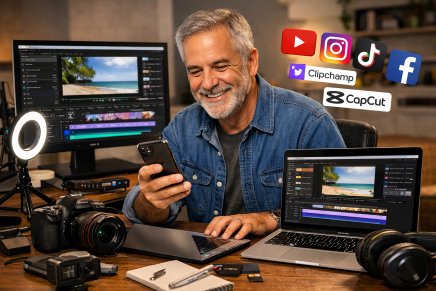
I’m glad this Google Drive opened up for me because it feels like an opportunity to refocus on my technology skills—the ones I developed and relied on for years back in college. The challenge is that I stepped away from those skills for more than eleven years after earning my IT degree, mainly because I had to focus on making a living. I eventually built a career in healthcare and have now retired from that field.
Now, I feel a strong pull to return to programming and working on computer-based projects—but this time with a calmer, more grounded mindset. Not the same intense excitement as before, but something steadier and more intentional.
This shift started just a couple of days ago when my iPhone became locked after I spent too much time experimenting with different apps, gadgets, cloud services, and device integrations. I was trying to make everything work together seamlessly, and apparently, Apple flagged the activity as suspicious. As a result, I lost access to my phone.
Oddly enough, that setback triggered something positive.
I found myself revisiting the gadgets I had once been excited about—tools for video recording and editing that I had gradually abandoned because smartphones made everything so easy. Back when I was working and had more disposable income, I invested in devices like action cameras, a MacBook Air, a mini PC, and a Canon camera. My goal at the time was to explore content creation and participate in the growing world of social media.
I’m grateful now that I made those purchases, because I wouldn’t be able to afford them as easily in retirement.
However, despite that initial enthusiasm, I eventually became complacent. The convenience of the iPhone—and the powerful editing apps available on it—led me to rely almost entirely on one device. There’s nothing wrong with that, of course, and I’m proud of what I’ve created so far. But in doing so, I unintentionally limited my growth. My broader skill set remained underdeveloped because I stayed within the comfort zone of smartphone-based tools.
Being locked out of my iPhone forced me to confront that limitation.
It reminded me why I invested in those other devices in the first place—not to collect them, but to grow and challenge myself. I realized I may have been drifting toward a habit of acquiring tools without fully using them for self-development. That realization was important.
Now, I feel ready—truly ready—to return to learning and creating with intention. In a way, I even feel grateful for the lockout. It feels like a reset, maybe even a form of guidance—something that nudged me back toward what genuinely brings me joy.
This doesn’t replace the other areas of my life that I value, like gardening, exercise, and learning about health. Instead, it complements them. It’s about finally adding back a piece of myself that I had set aside for far too long.
Yesterday, I took a concrete step in that direction by working on content creation using desktop applications instead of relying on my smartphone. It was a deliberate shift—choosing a more hands-on, structured process rather than the convenience I had grown used to.
This time, I approached video creation more methodically. I developed a step-by-step workflow for converting an impromptu video with voiceover into a cleaner, more polished final product.
In the past, I would manually cut out pauses (silence) and filler words. That process still works, but it often results in speech that sounds fragmented or grammatically off. That might be acceptable for casual content, but for presentations or instructional videos, it’s not ideal.
A better approach is to script your presentation in advance and use a teleprompter. Many modern editing apps—like CapCut and others—offer built-in teleprompter features, especially on smartphones. These tools make it easy to produce smooth, professional-sounding content, and they’ve been my go-to for a while.
However, I’ve started to recognize the importance of flexibility.
There are situations where you want to use video formats or camera setups that aren’t automatically optimized for platforms like Facebook or Instagram. For example, footage captured on an action camera or DSLR might not match the standard vertical (9:16) format. While smartphone apps can usually adjust these formats easily, relying solely on one device becomes a limitation—especially in situations like mine, where access to that device is suddenly lost.
So, I began rebuilding my workflow across multiple tools.
Here are the steps I took:
-
I recorded video using an action camera.
-
I transferred the footage to my computer and imported it into Clipchamp to remove silence and filler words.
-
I then exported that edited file and opened it in CapCut.
-
In CapCut, I adjusted the aspect ratio to 9:16 to make it suitable for platforms like Instagram, Facebook, and TikTok. (While these platforms support multiple formats, vertical video remains the most widely used and visually optimized.)
-
For YouTube, I kept in mind that a 16:9 horizontal format is generally more appropriate, especially for educational or instructional content.
-
Finally, I used CapCut to generate captions (closed captions), which not only improved accessibility but also helped me refine the video further by identifying and removing unnecessary segments.
Through this process, I was able to shorten the video from 3:42 to 3:19—a small but meaningful improvement in pacing and clarity.
More importantly, I reconnected with the process.
This experience reminded me that content creation isn’t just about convenience—it’s about craftsmanship, adaptability, and continuous learning. Moving forward, I want to keep building on this foundation, using all the tools available to me—not just the easiest ones.
- On the Road Review — Living Another Life Vicariously
- Revisiting the Gym: Delayed Onset of Muscle Soreness (DOMs)
- A Day of Adjustments, Distractions, and Mindful Choices
- Reflection: Living Within Means
- Ramon and Diabetes
- Self-Graded, Individualized Exercise: A Practical and Evidence-Based Approach for Aging Bodies
- Exercise Progression for Adults
- Cortisol: A Senior’s Trusted Helper—and a Hormone to Handle With Care
- ANY MOVEMENT WILL DO: Rethinking Exercise, Aging, and Quality of Life
- Reflection Tuesday Morning
Page 1 of 93